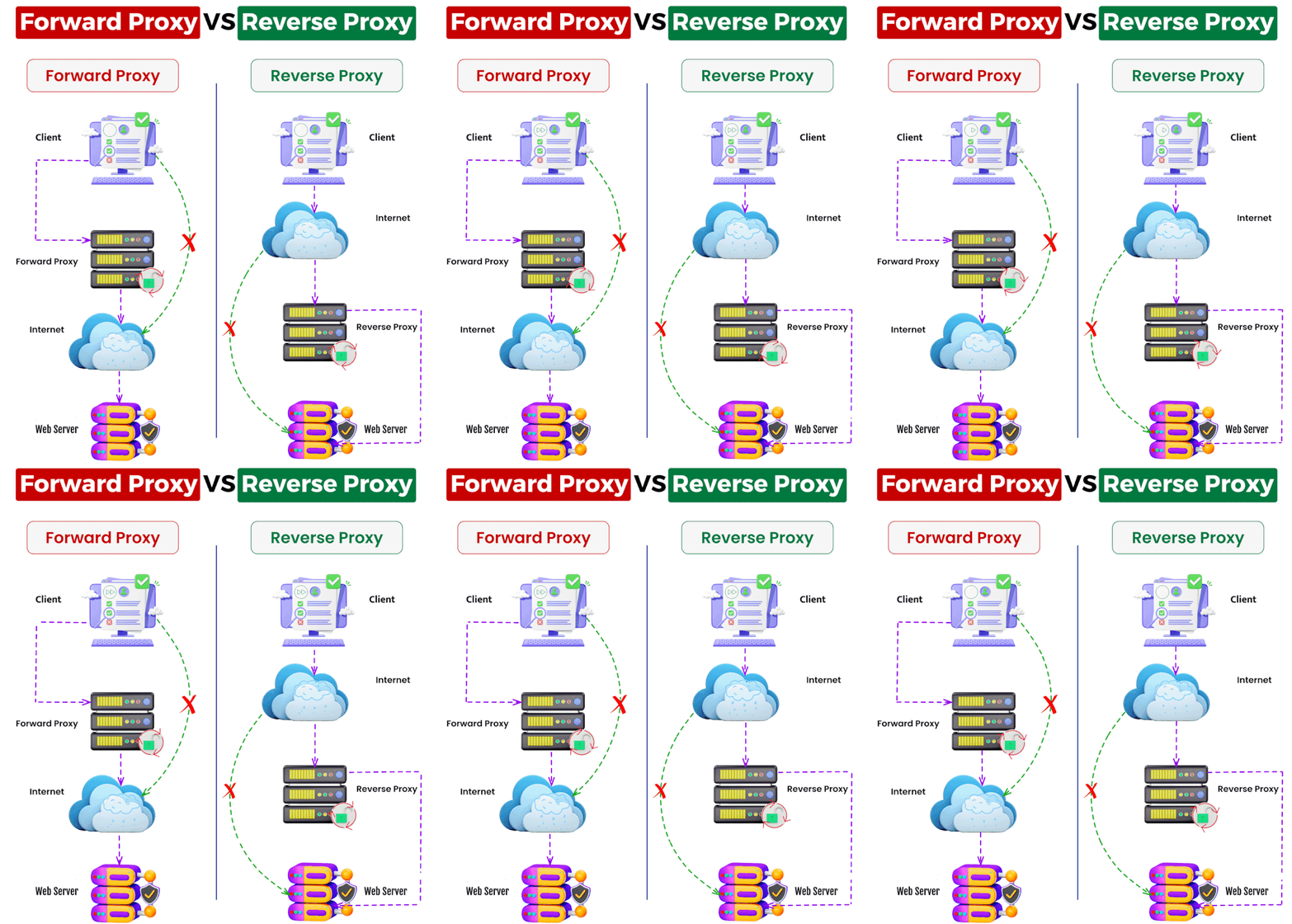
Forward and Reverse proxy services
A proxy server is a server that acts as an intermediary between a client and a server.
When a client requests a resource from a server, the proxy server forwards the request on behalf of the client.
The proxy server can then cache the resource, so that the client does not have to request it again if it needs it again.
Proxies are important for a number of reasons.
They are a common way to improve the security, performance, and scalability of web applications.
Let’s take a moment to understand two key players: 𝗙𝗼𝗿𝘄𝗮𝗿𝗱 𝗣𝗿𝗼𝘅𝘆 𝗮𝗻𝗱 𝗥𝗲𝘃𝗲𝗿𝘀𝗲 𝗣𝗿𝗼𝘅𝘆.
Don’t worry, I’ll keep it simple! 


Think of Forward Proxy as your secret friend who helps you when you want to see what’s going on outside without being noticed. 
For example, it allows you to browse websites that might be blocked in your region, all while keeping your identity hidden.
On the flip side, we have Reverse Proxy.
Imagine it as a really organized helper at a busy office, who takes your messages (web requests) and makes sure they get to the right department (servers) without any mix-ups. 
It helps distribute the web traffic evenly so that no single server gets overwhelmed.
So, here’s the simple way to remember:
Forward Proxy =  Your secret friend hiding your identity.
Reverse Proxy =  The helpful assistant managing web traffic.
Now, let’s sprinkle in a bit of technical lingo-
𝗙𝗼𝗿𝘄𝗮𝗿𝗱 𝗽𝗿𝗼𝘅𝗶𝗲𝘀 sit between clients and the internet.
They act as intermediaries, forwarding requests from clients to the internet and returning responses back to the clients.
Forward proxies can be used for a variety of purposes, including:
𝗛𝗶𝗱𝗶𝗻𝗴 𝘁𝗵𝗲 𝗰𝗹𝗶𝗲𝗻𝘁’𝘀 𝗜𝗣 𝗮𝗱𝗱𝗿𝗲𝘀𝘀: This can be useful for protecting the client’s privacy or for bypassing geo-restrictions.
𝗖𝗮𝗰𝗵𝗶𝗻𝗴: Forward proxies can cache frequently accessed content, which can improve performance.
𝗙𝗶𝗹𝘁𝗲𝗿𝗶𝗻𝗴: Forward proxies can filter traffic, blocking malicious requests or content.
𝗥𝗲𝘃𝗲𝗿𝘀𝗲 𝗽𝗿𝗼𝘅𝗶𝗲𝘀 sit between web servers and the internet.
They act as a front-end for the web servers, accepting requests from clients and forwarding them to the appropriate web server.
Reverse proxies can be used for a variety of purposes, including:
𝗟𝗼𝗮𝗱 𝗯𝗮𝗹𝗮𝗻𝗰𝗶𝗻𝗴: Reverse proxies can distribute traffic across multiple web servers, improving scalability.
𝗦𝗦𝗟 𝘁𝗲𝗿𝗺𝗶𝗻𝗮𝘁𝗶𝗼𝗻: Reverse proxies can terminate SSL connections, which can improve security.
𝗨𝗥𝗟 𝗿𝗲𝘄𝗿𝗶𝘁𝗶𝗻𝗴: Reverse proxies can rewrite URLs, which can be useful for redirecting traffic or for implementing content negotiation.