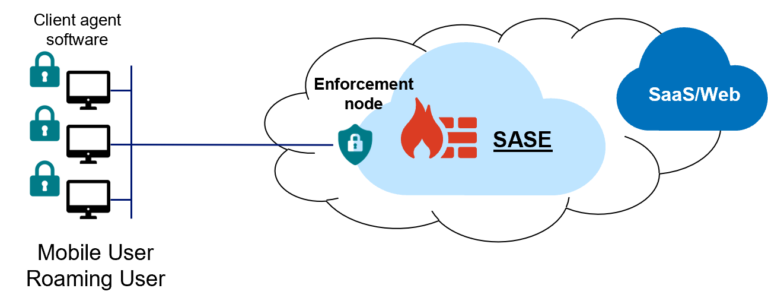
ZTNA v/s SSL VPN
ZTNA v/s SSL VPN
| Zero Trust Network Access | Legacy SSL VPN |
|---|---|
|
Zero-Trust network access trusts no one by default. Once authenticated, the user can only see the applications they are authorized to access instead of having access to complete network thus enforcing least-privilege access.
|
VPN enables connectivity to corporate networks. Once authenticated, user machine is part of customer network. Generally, access is granted based on networks instead of individual applications.
|
|
ZTNA provides endpoint isolation by only exposing authorized application to the authenticated user thus reducing the attack surface and preventing lateral movement of malware/viruses from an infected endpoint making it more secure than legacy VPN. |
Endpoint is part of corporate network. An infected endpoint can quickly spread the malware/virus infection to the exposed networks making it less secured than ZTNA.
|
|
Each application access control is defined explicitly, making the solution tedious to deploy in case the enterprise has hundreds of applications that their users need access to. |
Easy to deploy as no need to define individual applications. Instead just define enterprise networks to be routed via VPN tunnel.
|
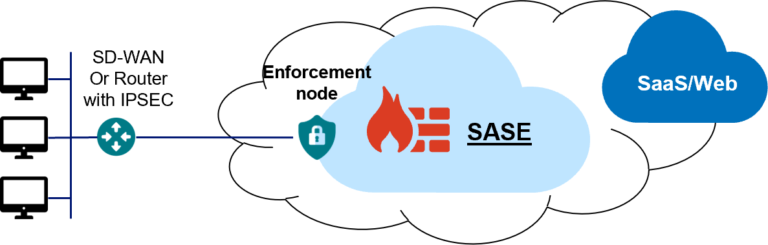
ZTNA Branch Connectivity to SASE enforcement node
ZTNA Mobile or Roaming user Connectivity to SASE enforcement node